 ramakaterra
Artículos
Apuntes documentados desde la península de Nicoya, los más nuevos primero.
What It Really Costs to Live on the Nicoya Peninsula: A 2026 Expat Budget
The first bill that surprises newcomers on the Nicoya Peninsula is not rent — it is the electricity bill after a dry season of air conditioning. A practical 2026 breakdown of what a month actually costs on this coast, with worked budgets for a single person, a couple, and a family, and an honest note on where the numbers come from.
The Medicine That Found a Second Home
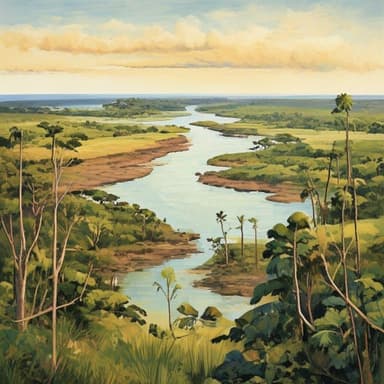
A Shipibo maestra sings icaros — the medicine songs carried down the Ucayali River in the Peruvian Amazon for as long as anyone can trace — not on that river at all, but on a hillside above the Gulf of Nicoya. This is how a tradition rooted in one river basin ended up with a second home half a continent away: it followed the people who kept it, and it brought its geometry, kené, along the way.
The House He Built From the Ground He Stood On
He tests a fistful of dry-season dirt against his palm — too much sand and it crumbles, too much clay and it cracks — hunting the soil ratio the old builders here knew by feel and never wrote down. This is the slow, physical craft of building a house out of the ground it stands on: thick earthen walls that turn the day's heat back hours after sunset, bamboo tied in against the earthquakes, and a dry season spent doing arithmetic on a cistern.
The Woman Who Waited for the Trees
Two years ago she could not push a fork into her own ground — a few decades of hooves and sun had baked the Nicoya pasture to a griddle. This is the slow, unglamorous arc of bringing a food forest back: shade planted first, water hauled through five rainless months, and the dry season the fork finally sinks in and the worms have come home.
¡Bomba!: The Art of Freezing a Marimba to Flirt
The marimba is mid-run when a man throws up his straw hat and shouts one word — ¡Bomba! — freezing the whole song so he can fire a rhymed flirtation at the woman across the dance floor. In Guanacaste's punto, a verse thrown is a verse owed, and the comeback is the whole art.
The Tree That Washed the Village's Clothes
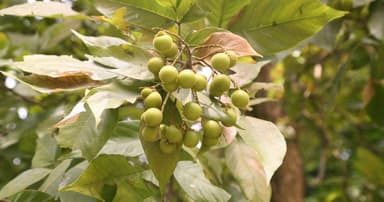
A grandmother crushes a handful of amber berries against a river stone and the water turns to lather — no soap, just the fruit of the jaboncillo. For generations along Guanacaste's dry rivers, one unremarkable tree quietly washed the village's clothes and hair, then left hard black seeds behind for rosary beads, buttons, and children's games.
The Instrument It Takes Three People to Play
By late afternoon in Santa Cruz de Guanacaste, somebody rolls a marimba into the shade of the plaza — Costa Rica's national instrument, built to be played by three people at once on the same keys. Hand-tuned hardwood bars and a buzzing membrane of dried pig intestine give it its warm voice, and a few bars in, an ordinary evening tilts into a fiesta.
The Fruit Built for an Animal That No Longer Exists
A cannonball-hard gourd grows straight out of the jícaro's trunk — a fruit evolved to be swallowed whole by the elephant-sized gomphotheres that vanished from Guanacaste 10,000 years ago. The mouth it was built for is long extinct; a horse's hoof and a carver's hand answer its knock anyway.
The Dance That Was Invented to Stop a Fight
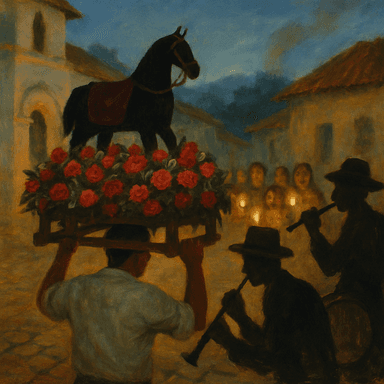
The oldest festival in Costa Rica is a dance: a carved cedar mare, heavy with roses, carried through Nicoya before dawn. La Yeguita was born from a legend to stop a machete fight — and once became public whippings — before a 1914 priest turned the whips back into a dance.
The Rider Who Is Running Out of Savanna
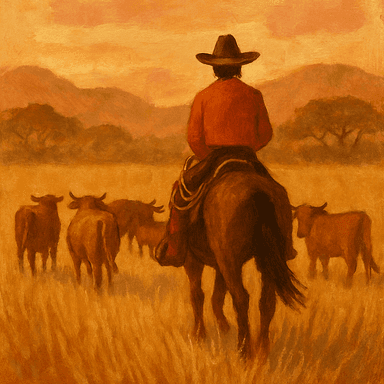
At Guanacaste's fiestas the sabanero still rides in his embroidered shirt — but the horseback herder who became Costa Rica's self-portrait was undone by a single highway, and the all-inclusive resorts built on the old haciendas now hang his portrait by the door.
The Wine You Have to Kill a Tree to Make
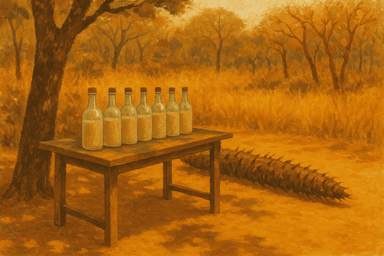
On the back roads of Guanacaste, one of Costa Rica's oldest drinks is tapped from a palm that doesn't survive the harvest — timed to the full moon and the high tide. The vanishing craft of vino de coyol.
The Women Who Plant the Forest They Harvest
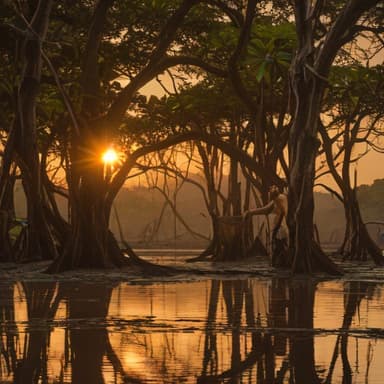
Before dawn, the women of Chomes wade into the Gulf of Nicoya's mangroves to harvest the piangua clam by hand — and then replant the very forest their living depends on. The story of CoopeMoluscos Chomes.
The Man the Island Was Meant to Erase
The most hated man in Costa Rica arrived on a prison island unable to read his own name — and left it one of the country's most celebrated writers. The story of José León Sánchez and Isla San Lucas.
The Beach That Fills With Turtles
On one dark-sand beach on the Nicoya coast, sea turtles arrive by the tens of thousands at once — and the village is allowed, by law, to gather a share of their eggs. The strange, hopeful story of the Ostional arribada.
The Volcano That Was Really a Reef
One of the 'volcanoes' on the Nicoya Peninsula turned out to be an ancient coral reef — lifted from the sea and hollowed into caves by rain. The strange, honest story of Barra Honda.
The Village at the End of the Road, and the Water That Named It
Nobody can quite say why a Costa Rican fishing village carries an Aztec emperor's name. But everyone knows exactly where the water falls. The honest story of Montezuma.
The Beach Named "Bad Land"
One of the ten most beautiful beaches in the world is officially named “bad land.” How Mal País earned its blunt name — and quietly outgrew it.
The Peace Two Tired Men Made
In 1858, two tired soldiers who had just survived the same war sat down to draw the line between Costa Rica and Nicaragua — and chose to trade rather than fight. The human story behind the Cañas–Jerez Treaty.
The Tree That Blooms When It Looks Dead
On the Nicoya Peninsula the dry-season hills look dead for months — bare, brown, skeletal. Then certain trees detonate in yellow flower while completely leafless, every one for miles within the same few days. The strange, synchronized bloom of the tropical dry forest.
The Night Sounds of Southern Nicoya — What You're Actually Hearing After Dark
The first night here is loud — a wall of frog, insect, gecko, bird, and monkey sound from every direction. A sourced field guide to what's actually making the noise, and why it peaks right after the rains start.
Guaitil & the Chorotega Potters
In a Guanacaste village on the old Santa Cruz–Nicoya road, potters still build Chorotega pots by hand — no wheel, colors ground from mineral stone, fired in a wood oven — a craft older than the country itself.
Why the Pacific here pulls: the quiet physics of a rip current
The same waves that make the southern Nicoya shoreline so beautiful feed a current that runs the other way — and reading a rip is the way to make peace with this coast.
Curú: The Ranch That Decided to Be a Refuge
A working ranch on the southeast Nicoya coast that became Costa Rica's first private national wildlife refuge — still run by the Schutt family who started replanting the land in 1933.
Where the Southern Tip Buys Its Vegetables: A Guide to the Saturday Feria
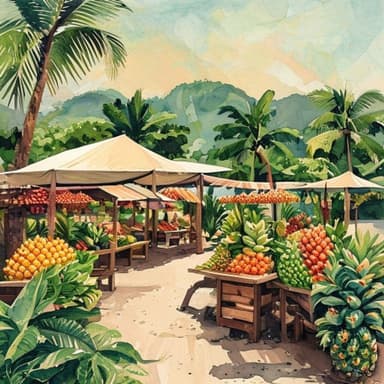
A practical guide to catching the traveling Saturday organic market as it moves down the southern Nicoya coast — Tambor to Montezuma to Santa Teresa — and eating whatever the season is doing.
Getting to Montezuma: The Last Leg Is the Point
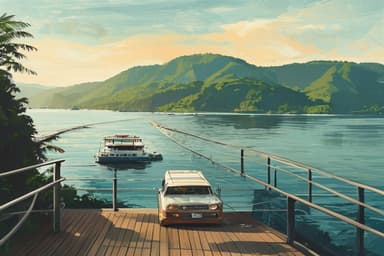
How the last leg to Montezuma actually works — the Puntarenas–Paquera ferry, the overland Friendship Bridge alternative, and why the winding, water-crossing route is a feature, not a flaw.
Reading the Rivers: Moving Through the Nicoya Peninsula in the Green Season
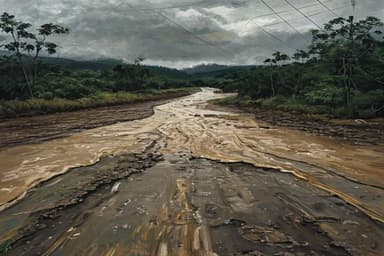
In the green season the Nicoya Peninsula runs on water — fords that rise fast from rain you can't see, and tides stacked on top. A practical guide to reading a river before you trust it.
The Cemetery You Can Only Reach at Low Tide
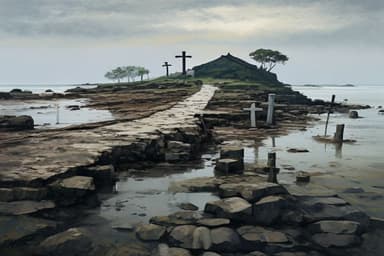
Off the village of Cabuya, at the southern tip of the Nicoya Peninsula, sits a small island cemetery still in use — reachable on foot only when the sea pulls back at low tide.
The Merchant Who Missed the Vote
Cupertino Briceño spent years arguing that the top of the Nicoya Peninsula should join Costa Rica — then was abroad on business the day, 25 July 1824, it finally happened.
La pareja que no dejó que se llevaran el bosque
Cómo dos inmigrantes escandinavos con un hotel diminuto y sin fortuna lucharon por proteger Cabo Blanco en 1963 — y sembraron la semilla de todo el sistema de parques nacionales de Costa Rica.
Dos estaciones, un pueblo pequeño: cómo el "verano" y el "invierno" rigen la vida en el sur de Nicoya
El calendario de Costa Rica está al revés — y las dos estaciones rigen calladamente todo: las carreteras, el agua del grifo, la fruta, el oleaje y el precio de una habitación.
Guía de campo para entrar a un taller en el sur de Nicoya
Un mapa amistoso y documentado de la escena de bienestar en la costa sur de Nicoya — a qué se puede entrar de verdad una sola vez, y dónde todo viene empaquetado como retiro.
Permacultura en la península de Nicoya — quién la practica de verdad
Un mapa documentado de las fincas, las eco-aldeas y la antigua tradición campesina detrás de la permacultura de Nicoya — y cuánto cuesta llegar.