 ramakaterra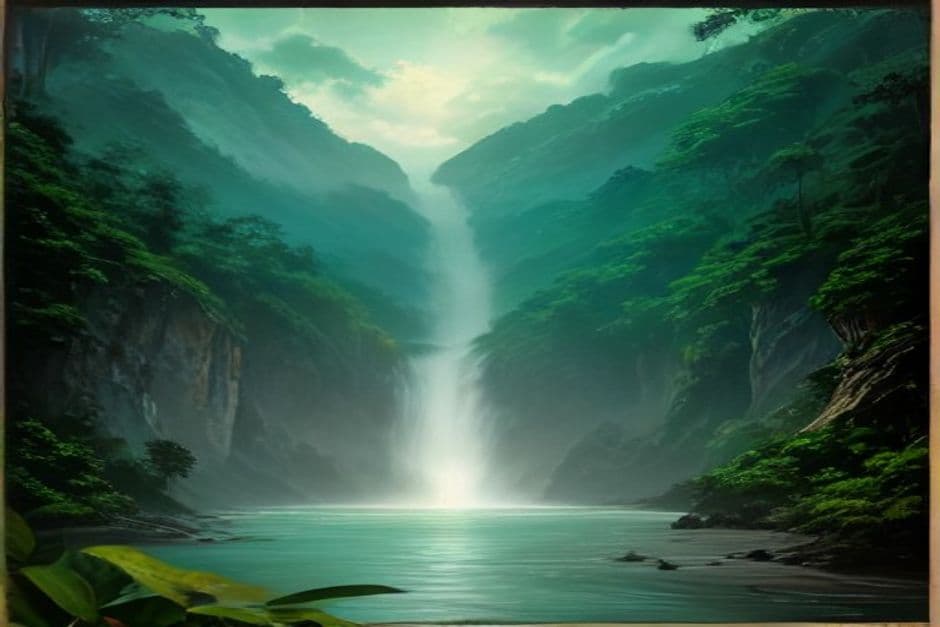
The Village at the End of the Road, and the Water That Named It
Esta publicación está disponible actualmente solo en inglés.
Drive south from Cóbano long enough and the pavement gives out. What's left is a dirt track squeezed between jungle-covered hills and the Pacific, and at the end of it, where the road more or less runs out of places to go, sits Montezuma — a few blocks of guesthouses, juice stands, and barefoot travelers, tucked against a river that spends its whole life falling.
Ask anyone in town two questions — why is it called Montezuma, and what's the deal with the waterfall — and you'll get a shrug and a shower recommendation for the first, and an immediate, detailed answer for the second. That split tells you something true about this place. Nobody's sure exactly why it has the name it does. Everybody knows exactly where to swim.
The Name Nobody Can Quite Explain
Here's the honest version, because the tidy version doesn't exist.
"Montezuma" — sometimes rendered locally as Moctezuma, sometimes jokingly as "Montefumar" (from fumar, to smoke, a wink at the town's laid-back reputation) — is unmistakably the same name as Moctezuma II, the last independent Aztec emperor, who ruled from what's now Mexico City and died in 1520 during the Spanish conquest. The name itself comes from the Nahuatl Moteuczoma, roughly "he who frowns like a lord." That much is settled etymology, and it's not in dispute anywhere.
What is genuinely unclear — and this is the part worth saying plainly rather than papering over — is why a fishing village on Costa Rica's Pacific coast, more than a thousand kilometers and an entirely different Indigenous nation away from the Aztec heartland, ended up carrying an Aztec emperor's name. The Nicoya Peninsula's own pre-Columbian inhabitants were the Chorotega, not the Aztec, and there's no documented connection between Moctezuma's empire and this stretch of coastline. We looked for a founding story — a settler, a mapmaker, a specific moment someone pointed at this river mouth and said this one's Montezuma — and it isn't out there in any source we could verify. Not in the town's own tourism-board history, not in the available municipal records, not in the historical guides. If a documented origin story exists, it hasn't surfaced in the accounts available to us. What's left is either a genuine historical gap or a piece of naming lost to informal, undocumented local memory.
So: the name is real, its Aztec root is certain, and its arrival on this particular Costa Rican coastline is, as far as we can verify, simply not recorded. That's a more honest answer than most guides give you, and it's worth more than a made-up legend would be.
What is documented is the shape of the town's actual life. For much of the twentieth century, Montezuma functioned as a working port — the outlet for agricultural goods coming down from the highland farms, back before roads connected this end of the peninsula to anywhere else. Electricity didn't arrive until 1986. When a road finally linked nearby Paquera to Cóbano in the mid-1970s, the port lost its reason to exist, and the town quietly became something else: first an ordinary fishing village again, then — as travelers on tight budgets started finding their way down the coast through the 1980s and 90s — the bohemian, barefoot, unmistakably itself town it is today. No developer plan, no resort chain got here first. It just accumulated, one traveler and one guesthouse at a time, into whatever Montezuma is now.
The Water the Whole Town Is Built Around
If the name is a mystery, the waterfall is the opposite: the most literal, physical, undeniable fact about the place.
The Montezuma River drops out of the hills just south of town in a series of cascades — most commonly described as three falls, with a combined drop of around 40 meters (130 feet), the tallest single tier plunging roughly 24 meters (about 79 feet) into a wide pool at its base. You can reach the lower falls on an easy walk from the village center; the upper tiers ask more of you — a scramble along wet rock. The cliff jumps at the upper pools are a genuine draw, and a genuine risk: the Tico Times, reporting from the site in 2015, documented multiple deaths there, including a jumper who struck the rocks on the way down and a visitor dislodged from a slick ledge who drowned after hitting the water wrong. Local guides point to a rock outcropping just beneath the tallest jump as the specific hazard. Read the rocks, ask a local before you leap, and treat a waterfall you've never jumped before as exactly the stranger it is.
None of which stops it from being the reason most people remember Montezuma at all. Long before anyone was calling this a wellness town or a nomad town or a surf town, it was a waterfall town — a river tumbling down from the jungle almost close enough to hear from the beach, with swimming holes cut into rock that travelers have been finding their way to, one word-of-mouth recommendation at a time, since long before anyone thought to build a guesthouse to catch them at the bottom.
(A short way further down the coast, past Cabuya, sits Cabo Blanco, Costa Rica's first protected reserve — a different, deeper story for another day, but a reminder that this whole stretch of coast has always been defined by its water and forest.)
What the Falls Actually Are
Stand at the base of the lower cascade on almost any afternoon and you'll see the town's entire self-selected population in miniature: travelers cooling off after the walk in, a couple of local kids who clearly know a better jumping spot than the one everyone else is using, someone floating on their back staring straight up at where the water disappears over the lip above. It doesn't perform for cameras particularly well — waterfalls rarely do — but it does something better, which is give a small, remote, oddly-named town a genuine center of gravity that has nothing to do with commerce or theory. You come here because the water is cold and the rock is warm and the jungle around it hasn't been asked to explain itself.
Which might be the real answer to both questions at once. Nobody can tell you with certainty why this place is called what it's called. But everybody can walk you to the thing that actually built it — a river that has been falling down the same hillside, into the same pools, for a great deal longer than the town has existed to name itself after anyone at all.
Sources
- Costa Rica Travel Life — "12 Things to Know Before Visiting Montezuma Waterfalls": costaricatravellife.com/montezuma-waterfalls/
- montezuma-costarica.com — "Montezuma Waterfalls in Costa Rica": montezuma-costarica.com/montezuma-waterfalls/
- Two Weeks in Costa Rica — "Montezuma: A Bohemian Beach Town": www.twoweeksincostarica.com/montezuma/
- nicoyapeninsula.com — Montezuma overview and history: nicoyapeninsula.com/montezuma/
- Wikipedia — "Montezuma, Costa Rica": en.wikipedia.org/wiki/Montezuma,_Costa_Rica
- Wikipedia — "Moctezuma II" (etymology of the name, from Nahuatl Moteuczoma): en.wikipedia.org/wiki/Moctezuma_II
- Lonely Planet — "Montezuma Waterfalls, Montezuma, Costa Rica": www.lonelyplanet.com/costa-rica/peninsula-de-nicoya/montezuma/attractions/montezuma-waterfalls/a/poi-sig/1373636/358334
- The Tico Times — "Thrill-Seeking in Costa Rica: Jumping Off Montezuma's Waterfall" (documented fatalities, guide account of the rock outcropping hazard): ticotimes.net/2015/06/19/montezuma-waterfall-leap-if-you-dare
Note: no source consulted documents a specific origin story for why this Costa Rican village carries the name of the Aztec emperor Moctezuma. This piece states that gap honestly rather than filling it with an invented legend.
Made using AI.