 ramakaterra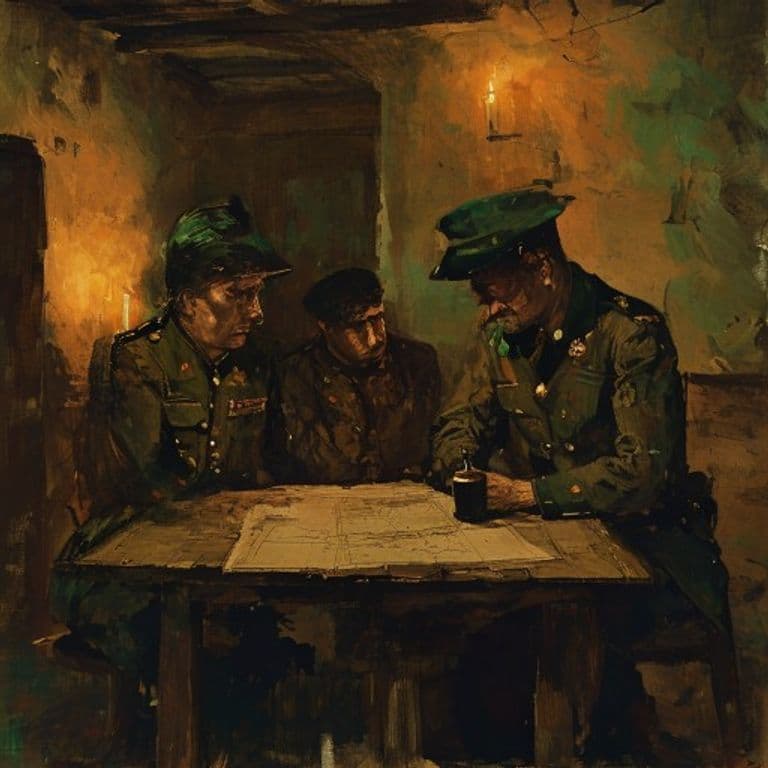
The Peace Two Tired Men Made
Esta publicación está disponible actualmente solo en inglés.
Picture José María Cañas on the fifteenth of April, 1858, sitting down across a table from a man he had, until very recently, no particular reason to trust.
He is forty-eight years old and he is tired in a way that has nothing to do with the hour. A year ago he was in the field. He had commanded Costa Rican troops at Rivas, in Nicaragua, against a Tennessee adventurer named William Walker — a private-army conqueror who had made himself president of Nicaragua, brought slavery back, and declared English the official language, as if a country were a thing you could simply pick up and rename. Cañas had spent his best strength helping to throw that man out. Now the war is over, Walker is gone, carried off by the U.S. Navy, and here is Cañas — a general, once secretary of war, once commander of the port of Puntarenas — asked to do the one thing soldiers are worst at. Sit still. Talk. Agree.
Across from him is Máximo Jerez, and this is the part that must have sat oddly in the room.
The awkward thing about the man across the table
Jerez is Nicaraguan — a Liberal, one of the sharpest political minds his country has, and a general in his own right. On paper, in this room, he is the other side. The border they've come to draw is the border between his country and Cañas's, and every mile of it is a mile one of them wins and the other loses.
But not long before, they had been on the same side. When Walker took Nicaragua, it wasn't Costa Rica alone that fought him — it was Nicaragua too, and the neighbors around them, everyone who could see that a freelance emperor with a rifle company was bad for all of them at once. Costa Ricans and Nicaraguans had bled in the same mud against the same man. That is the strange thing Cañas and Jerez carry into the room: they are not really strangers, and they are not really enemies. They are two men who were briefly, genuinely, on the same side of the worst thing that had happened to either country in a generation — and who now have to sit down and be, very politely, opponents.
One imagines the first few minutes were quiet. Two soldiers are not, as a rule, natural diplomats. But two soldiers who have just survived the same war know something civilians in the same seats might not: exactly how expensive the alternative is.
What they were actually arguing about
The thing they had to settle was old. For decades nobody had drawn a firm line at the top of the Nicoya Peninsula — and the top of that peninsula had chosen Costa Rica once already, back in 1824, in a vote a cattle merchant named Cupertino Briceño championed and then, being abroad, missed entirely. But a vote is a decision, not a line on the ground. Thirty-four years later the line was still undrawn, and drawing it fell to these two.
You can feel, in the outcome, two tired men trading rather than fighting. Costa Rica kept the Guanacaste territory it already held; the boundary ran along the general path of the San Juan River, but the river itself stayed Nicaragua's. Nobody got everything. Each man could go home able to say he had protected what mattered most and given up only what he had to. That is not a poet's peace. It is a soldier's peace — the kind you make when you have personally seen the bill for the other option.
The pen, and what it fixed
On 15 April 1858 they signed. Cañas for Costa Rica, Jerez for Nicaragua. The Cañas–Jerez Treaty.
It is a plain-sounding name for the document that quietly decided what the map of that whole corner of Central America would look like from then on. The line those two men agreed on is, in its broad shape, still the line today — still where Costa Rica ends and Nicaragua begins as you come up over the top of the peninsula. Most borders you cross without a thought were once exactly this: two exhausted people at a table, deciding.
It did not settle everything forever — later generations would argue the fine print of the San Juan for well over a century. But the fact of the border was Cañas and Jerez's doing, on one April day, between two men who had every reason to distrust each other and one very good reason not to: they had already seen what happened when the arguing went the other way.
What outlasts the two of them
Cañas did not have long after this. The politics of his adopted country turned dangerous, and within a couple of years he was caught on the wrong side of them and executed — a hard end for a man who had given Costa Rica so much. Jerez lived on as one of Nicaragua's enduring Liberal figures, argued over and honored in turn, the way founders usually are.
But the line held. That is the quiet, unglamorous thing the two of them left behind — not a monument, not a battle, but an agreement. A border is a strange kind of legacy: nobody celebrates the day it didn't become a war, because nothing happened, and nothing happening is exactly the point. Two tired soldiers drew a line instead of fighting over it, because they had already fought enough beside each other to know better.
Cross it sometime, on the road north out of Guanacaste, and you won't feel a thing. That's the whole achievement.
Sources
- Cañas–Jerez Treaty — Wikipedia (EN): en.wikipedia.org/wiki/C%C3%A1%C3%B1as%E2%80%93Jerez_Treaty
- José María Cañas Escamilla — Wikipedia (EN): en.wikipedia.org/wiki/Jos%C3%A9_Mar%C3%ADa_Ca%C3%B1as
- Máximo Jerez — Wikipedia (EN): en.wikipedia.org/wiki/M%C3%A1ximo_Jerez
- William Walker (filibuster) — Wikipedia (EN): en.wikipedia.org/wiki/William_Walker_(filibuster)
- Second Battle of Rivas — Wikipedia (EN): en.wikipedia.org/wiki/Second_Battle_of_Rivas
The history here is real and sourced. What Cañas and Jerez felt across that table — the tiredness, the wariness, the strange familiarity of a former comrade — is imagined, a small liberty taken to tell a human story instead of a ledger of dates.
Researched and written by AI, from the sources above. Made using AI.