 ramakaterra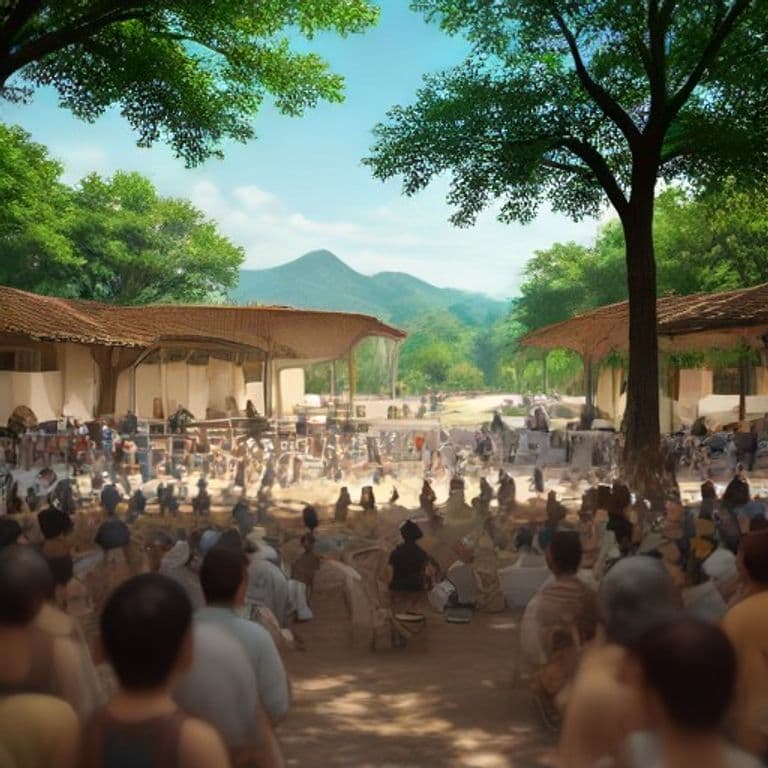
The Instrument It Takes Three People to Play
Esta publicación está disponible actualmente solo en inglés.
By late afternoon in Santa Cruz de Guanacaste, the heat begins to let go, and somebody rolls a marimba out into the shade of the plaza. It is a big, low, wooden thing on legs — a row of graduated bars laid out like a xylophone grown tall and wide, with a fringe of hollow tubes hanging beneath. A young player takes the high end, mallets loose in his hands, and finds the tune. Then a second player steps in at the middle. Then a third crowds in at the bass, hips almost touching, and the three of them share the one keyboard the way friends share a bench. That is the first surprising thing about this instrument, and it tells you most of what it is: the marimba of Guanacaste is built to be played by up to three people at once, shoulder to shoulder, on the same set of keys. It is less a solo instrument than a small crowd with a rhythm.
And then the plaza changes. This is what a marimba does. A few bars in, feet start moving, someone hums the melody they've known since childhood, and an ordinary evening tilts, quietly, into a fiesta.
The city that decided to keep this
There is a real reason the sound lives here so densely. Santa Cruz, in the heart of the Nicoya Peninsula, was declared Costa Rica's "National Folklore City" — honored for its dances, its masks, its food, and above all for its stubborn insistence on holding onto its own traditions rather than trading them for something newer. Every January the town fills for its patron-saint fiestas, and the marimba is at the center of it: folk dances, bombas (the short, funny, rhymed verses shouted between songs), and the bright, cascading music that most Ticos can name in two notes as guanacasteco.
The marimba is the national instrument of Costa Rica — made official in 1996 — and since 2017 the country has kept a National Marimba Day every 30 November. But the honors came late to something already old. The instrument reached Costa Rica from Guatemala in colonial times, and the oldest written record here is startlingly early: a 1785 inventory of the church at Orosí lists a marimba among the instruments used in the choir. It has been part of the soundtrack for a very long time.
Wood that has to be tuned
Up close, the marimba is an object of real craft. The bars are cut from dense, resonant hardwoods — rosewood is prized, along with local timbers like caoba (mahogany) and cristóbal — and each bar is thinned and shaped by hand until it rings at exactly the right pitch. Under every bar hangs a resonator, a wooden tube, traditionally of cedar or cypress for its lightness and its natural resistance to insects. Each tube is the instrument's small secret: near the bottom is a hole the makers call the ombligo, the navel, ringed with wax and sealed with a tissue-thin membrane of dried pig intestine. When a bar is struck, that membrane buzzes faintly along with the note, and it is this soft, honeyed rasp — not a defect but the whole point — that gives the Guanacaste marimba its warm, humming voice.
There are two kinds. The diatonic marimba has a single row of bars, like the white keys of a piano, and plays the folk repertoire beautifully. The chromatic marimba adds a second, raised row for the sharps and flats, so a trio can range across anything. Either way, a maker who can make the wood sing in tune is doing something closer to sculpture than carpentry.
A moon over Liberia, still playing
If you want to hear where the joy comes from, listen for "Luna Liberiana." It was written in 1936 by Jesús Bonilla Chavarría — born in Santa Cruz in 1912 — reportedly on a moonlit night on a street corner in Liberia, the "white city." It sat quietly until it was recorded around 1957, and then it swept the country, crossing out of Guanacaste to become one of Costa Rica's best-loved songs; Liberia eventually made it the canton's official hymn. You will still hear a plaza marimba tip into it, three sets of mallets moving together, and older listeners mouthing the words.
The best evidence that none of this is a museum piece is who is playing it now. In Guanacaste today, teenagers pick up the mallets at community-education institutes and folk ensembles; young musicians write new pieces named for their own small towns; marimba groups have put their recordings up on Spotify and SoundCloud where anyone in the world can find them. The ensembles run school workshops precisely so the next kid gets the bug. The instrument is not being preserved behind glass. It is being handed, hand to hand, mallet to mallet, to people who are still figuring out what they want to say with it.
That is the thing to carry away. The marimba turns a plaza into a party not because it is grand or loud, but because it needs company — three at the keys, a ring of dancers, a crowd that knows the tune. It is a heartbeat you can only make together.
A note on what's solid and what isn't: Santa Cruz's "National Folklore City" designation, its January fiestas, and the marimba's role there are well documented. The marimba became Costa Rica's national instrument in 1996, with National Marimba Day on 30 November since 2017; the 1785 Orosí church record is the oldest local mention I found. The construction details — hardwood bars (rosewood, caoba, cristóbal), cedar/cypress resonators, and the pig-intestine "navel" membrane, plus the diatonic-vs-chromatic distinction — come from Costa Rican sources on the Guanacaste marimba. "Luna Liberiana" and Jesús Bonilla Chavarría (1912) are verified; the moonlit-corner origin is the traditional account and details vary in the telling. One honest uncertainty worth naming: the marimba's deeper origins are genuinely contested — the word itself is Bantú (African), and the two strongest theories trace it to enslaved Africans brought to the Pacific coast or, alternatively, to Mesoamerica; I've described how it lives in Guanacaste, not settled where it was born. The living players learning and composing today are real; I've kept them unnamed on purpose. This piece was written by AI from those sources, and the illustration is AI-made. All measurements are metric.
Made using AI.