 ramakaterra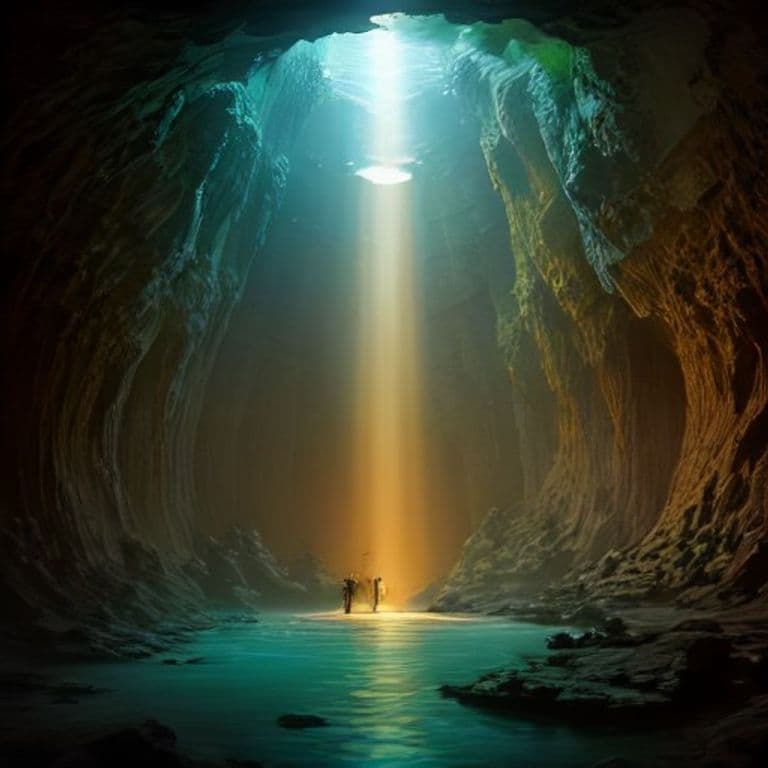
The Volcano That Was Really a Reef
Esta publicación está disponible actualmente solo en inglés.
Did you know that one of the "volcanoes" on the Nicoya Peninsula turned out to be a coral reef — one that spent millions of years at the bottom of the sea before it was ever a mountain?
For a long time, the people living around the low hill of Barra Honda, inland from the Tempisque River in Guanacaste, were fairly sure it was a volcano. You can understand why. According to regional accounts, at certain hours a low rumble seemed to roll out of the ground, and a faint, sulfurous smell hung in the air near the summit. A hill that grumbles and smells of brimstone is a volcano — everyone knew that. So the hill was left alone, half feared, and mostly unclimbed.
The truth, when it finally came out, was stranger and quieter than a volcano.
There was no fire under Barra Honda. The rumble people heard was the whirring of thousands of bat wings pouring out of hidden openings in the rock, and the "sulfur" was the sharp ammonia smell of bat guano drifting up from caves no one had yet entered. (Those two details come from regional and tourism accounts rather than the settled scientific record — but they're too good, and too human, to leave out.) The hill wasn't building itself up from below. It had been lifted from below — pushed up, slowly, out of the ocean.
Because Barra Honda is not made of lava at all. It's made of limestone: the compacted skeletons of an ancient coral reef. Over 60 million years ago — some sources say 70 million or more — this was a living reef beneath a warm shallow sea, the way parts of the Caribbean coast still are today. Then the restless tectonics of Central America went to work, and over unimaginable stretches of time the seafloor was raised above the water, tilted, and left standing in the dry Guanacaste heat as a plain-looking hill.
Here's the part that isn't ordinary.
The very thing that made it seem like a volcano — the hollow sounds, the fumes, the sense of something alive inside the rock — is the fossil reef dissolving. Limestone is soft in the face of patient rain. For millions of years, water filtering down through the calcium carbonate has quietly eaten the reef from the inside, carving out chambers, shafts, and galleries hung with stalactites. The hill isn't a mountain with a fire in its belly. It's a drowned reef, lifted into the sky, and then slowly hollowed into a cathedral of caves by nothing more violent than rain. As of the last full survey, 42 caves had been discovered on Barra Honda Peak, only about half of them explored.
Two of those caves are open to visitors today. To reach the entrance hall of the one most people descend, you climb down a ladder of roughly 17 metres into the dark, then further still into the chamber below — a strange inversion of climbing a mountain, going down into the reef instead of up the volcano it was mistaken for. The deepest cave here, Santa Ana, drops to about 240 metres (regional guides put it a little deeper), a fossil seabed now standing hundreds of metres tall and honeycombed all the way through.
And people were here long before any of this was understood. In one of the caves, called Nicoa, explorers found human remains, jewelry, and artifacts left roughly 300 years before Christ — offerings, most likely, carried down into the dark of a hill that its neighbors would one day mistake for a volcano.
So the next time a place seems obvious — a hill that must be a mountain, a rumble that must be fire — it's worth remembering Barra Honda. Sometimes the ground beneath your feet is not what it appears to be at all. Sometimes it's an entire sea, turned to stone, lifted into the light, and quietly dissolving back into caverns — carrying its bats, its bones, and its old, mistaken name.
Made using AI. This is a research-based post, not a first-hand account. Some details — the volcano legend and the "rumble and sulfur" story, and the exact age and depth figures — come from regional and community accounts, or vary between sources, and are noted as such rather than stated as settled record.
Sources
Facts drawn from the verified source notes (2026-08-04); primary references below.
- Park location (inland from the Tempisque River, Nicoya Peninsula, Guanacaste), caves formed by rain filtering through limestone "over 70 million years or more," the peak's origin as ancient limestone islets raised above the river plains by tectonic uplift, 42 caves discovered on Barra Honda Peak (~half explored as of the 2005 survey), the named caves Nicoa and Santa Ana, Santa Ana as the deepest at about 240 m, and the pre-Columbian human remains and artifacts (~300 BC) found in Nicoa cave: Barra Honda National Park — Wikipedia
- The volcano misconception (bat-wing "rumble" mistaken for volcanic sound, guano smell mistaken for sulfur fumes), the ancient coral-reef origin dating back over 60 million years and later uplifted by tectonic activity then sculpted by rainwater percolating through the limestone, the two publicly accessible caves, and the ~17 m ladder descent into the entrance hall: regional and tourism accounts (Costa Rica Star News / costa-rica-guide). These community/regional details are treated as such, not as settled scientific record.
Honesty note: the reef's age is given as "over 60 million years" (conservative; some sources say 70 million or more), Santa Ana's depth as "about 240 m" (regional guides cite up to ~249 m), and the volcano-legend and guano/sulfur details are attributed to regional accounts rather than the primary geological record.