 ramakaterra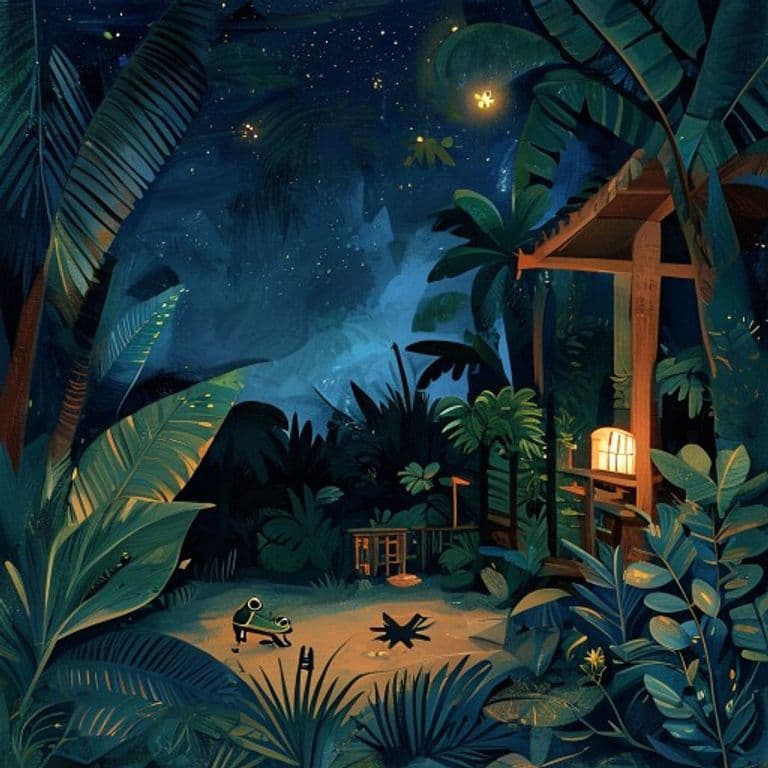
The Night Sounds of Southern Nicoya — What You're Actually Hearing After Dark
The first night is usually the surprising one. The sun drops fast this close to the equator, and what follows is loud — a wall of sound from every direction, no obvious source, no obvious edge. It's tempting to assume something is wrong, or at least that something big is out there. Almost none of it is. Here's what's actually making the noise.
The tink you can't place
The most persistent single sound, near any patch of vegetation, is a sharp, metallic "tink" — like someone tapping a wine glass with a spoon, then doing it again for the next three hours. That's almost certainly the tink frog, Diasporus diastema — known locally as the rana tink, a name that gives up on describing it and just quotes it. It's a tree frog small enough to sit on a fingertip, calling from a low perch to attract a mate up to forty times a minute. Because it's tiny and well hidden, most people never see the animal behind a sound loud enough to carry from a house away. Its calling peaks in the hours right after sunset — exactly when you're most likely to be lying awake wondering what it is.
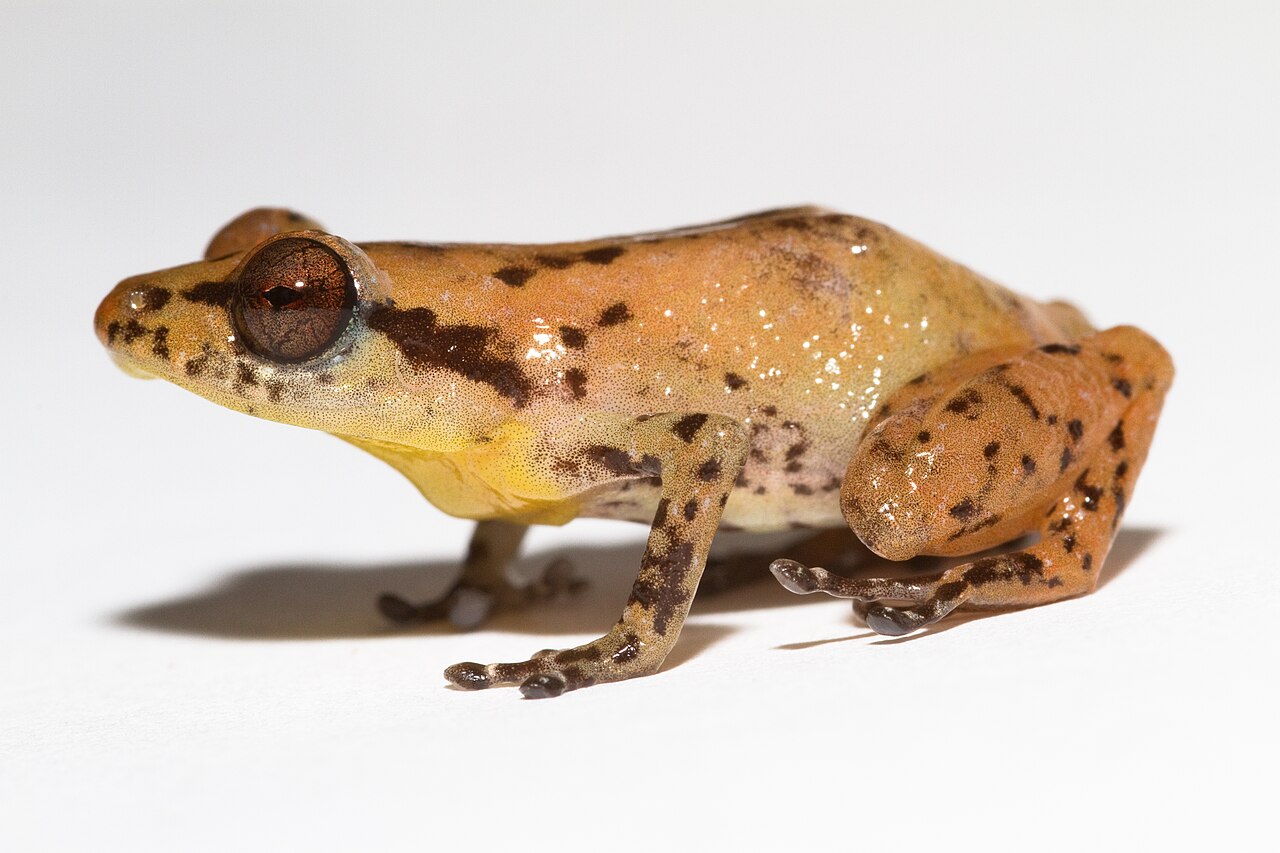
Tink frog (rana tink), Diasporus diastema. Photo: Brian Gratwicke, CC BY 2.0, via Wikimedia Commons.
Under that tink sits a deeper layer: after real rain, a loud, raucous, almost laughing call joins in — bigger tree frogs, commonly the Mexican tree frog (Smilisca baudinii), the rana del Pacífico, for whom a downpour is a starting gun. There's a reason the chorus gets louder after rain, not quieter: these are explosive breeders. Rainfall fills the temporary pools they need for eggs and tadpoles, and dozens to hundreds of frogs converge and call within the same 24–48 hours to use the water before it's gone. A dry-season night can be almost quiet; the same spot the night after the season's first real storm can sound like a different planet — one with a much worse sense of restraint.
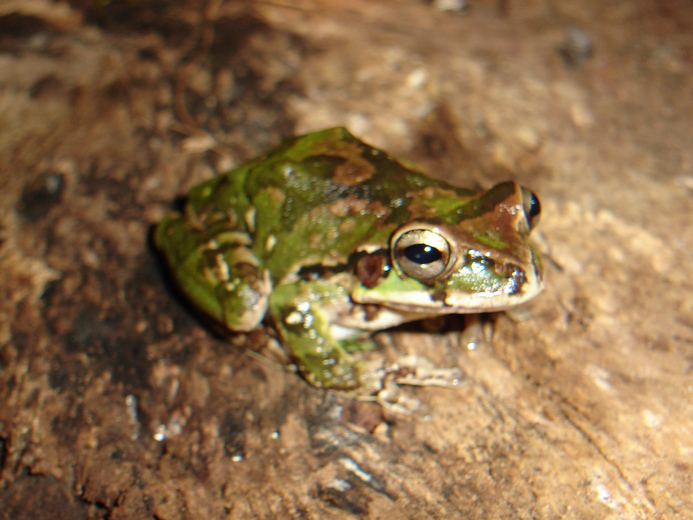
Mexican tree frog (rana del Pacífico), Smilisca baudinii. Photo: Vladlen Henríquez, CC BY-SA 2.5, via Wikimedia Commons.
The drone underneath everything
Behind the frogs sits a steadier, more mechanical sound — a buzzing, pulsing drone that seems to come from the trees themselves. That's insects: crickets and katydids producing sound by rubbing wing or leg parts together (stridulation). Cicadas are mostly daytime callers, so what's droning after dark is typically the cricket-and-katydid layer — lower, more rhythmic, closer to background music than any of the sharper calls cutting through it.
The chirps at the window
Indoors, or against a lit wall, there's a clipped, fast "chirp-chirp-chirp" that is genuinely startling the first time it comes from something the length of your finger. That's the common house gecko (Hemidactylus frenatus) — the geco casero — not native, but very much moved in: originally from Southeast Asia, thought to have arrived as a stowaway on cargo ships and spread from Costa Rica's ports across most of the country. The chirping is territorial or courtship business between males, essentially a very small lizard picking a very loud argument. Consider forgiving it: the same gecko is working the night shift on the moths and mosquitoes your porch light keeps summoning — the closest thing to a free, self-installing pest-control service you'll ever get.
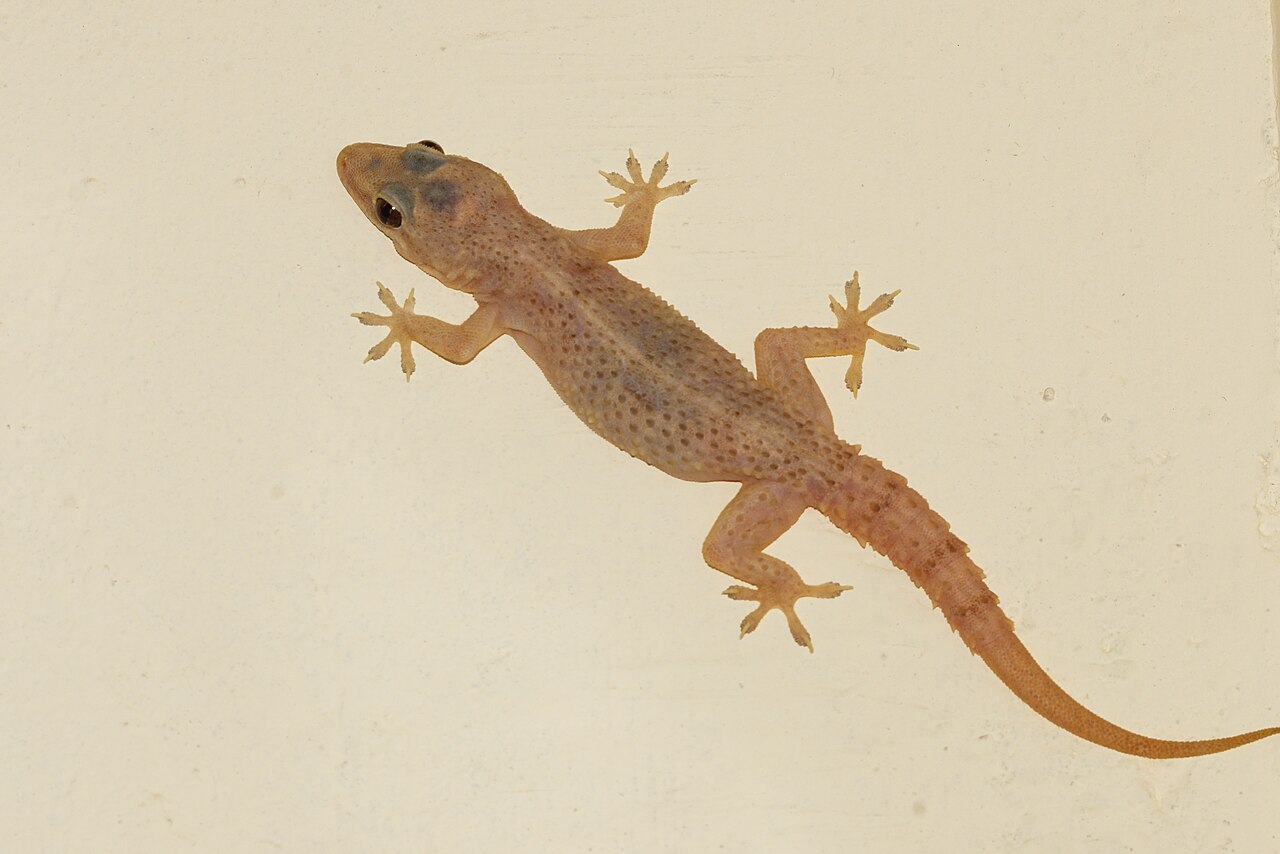
Common house gecko (geco casero), Hemidactylus frenatus. Photo: Vengolis, CC BY-SA 4.0, via Wikimedia Commons.
The voice on the road
Walking or driving a dirt road after dusk, a low, burry, whistled call — often rendered "pur-WEER" — is the common pauraque (Nyctidromus albicollis), a nightjar whose Spanish name, tapacaminos, literally means "road-blocker," and it earns it. It nests and rests directly on open ground and bare dirt tracks, and it is in no hurry to leave one. Come around a bend at night and you're far more likely to find a pauraque sitting calmly in your headlights, trusting its camouflage and your brakes in roughly equal measure, than to see one fly off. Drive the last stretch home slowly.
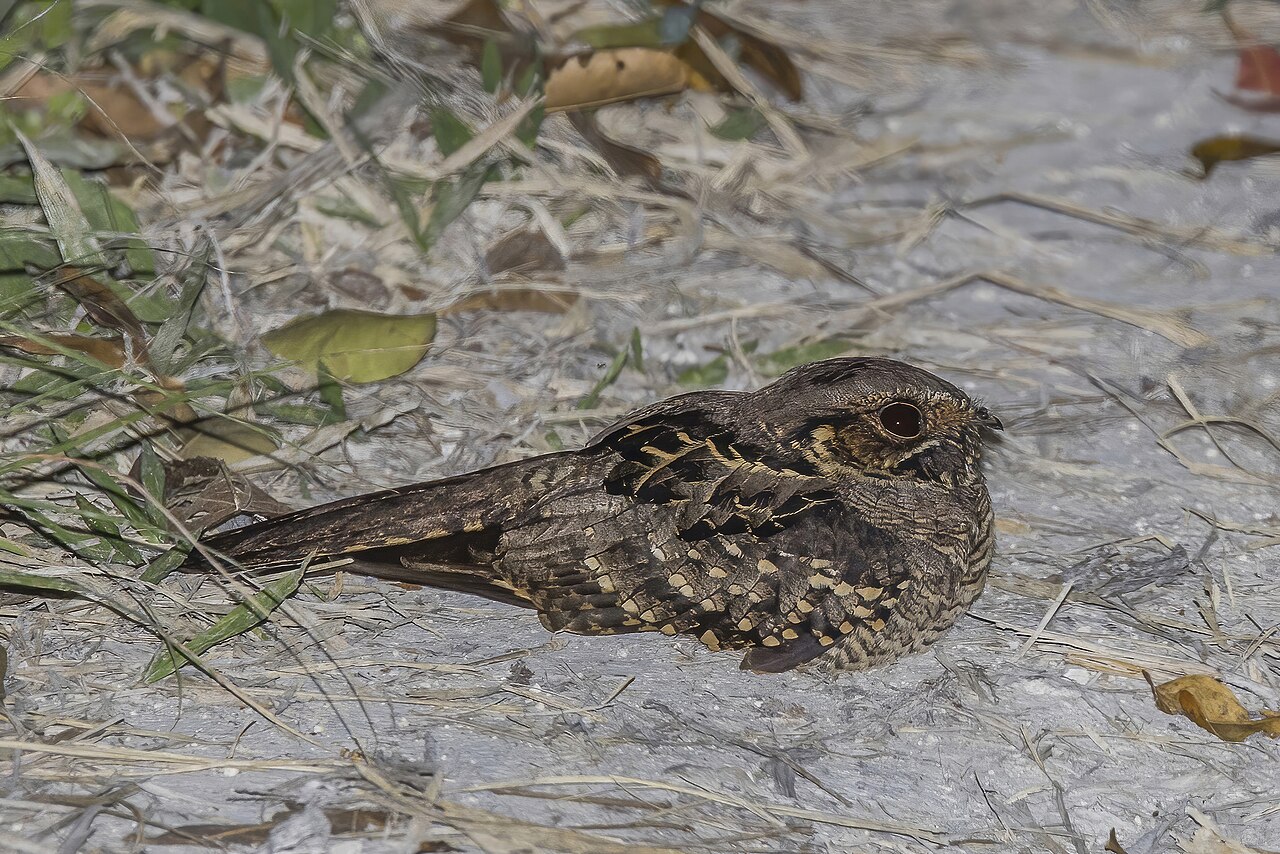
Common pauraque (tapacaminos), Nyctidromus albicollis. Photo: Charles J. Sharp, CC BY-SA 4.0, via Wikimedia Commons.
The hoot overhead
A deeper, more spaced-out series of hoots — sometimes "gwow gwow gwow," sometimes a soft, breathy "who" — belongs to one of the region's more common owls, the mottled owl (Strix virgata), the búho café. It hunts from low perches, including fence posts, and its call carries far through open country, which is why it can sound like it's right outside the window when it's actually a field away.
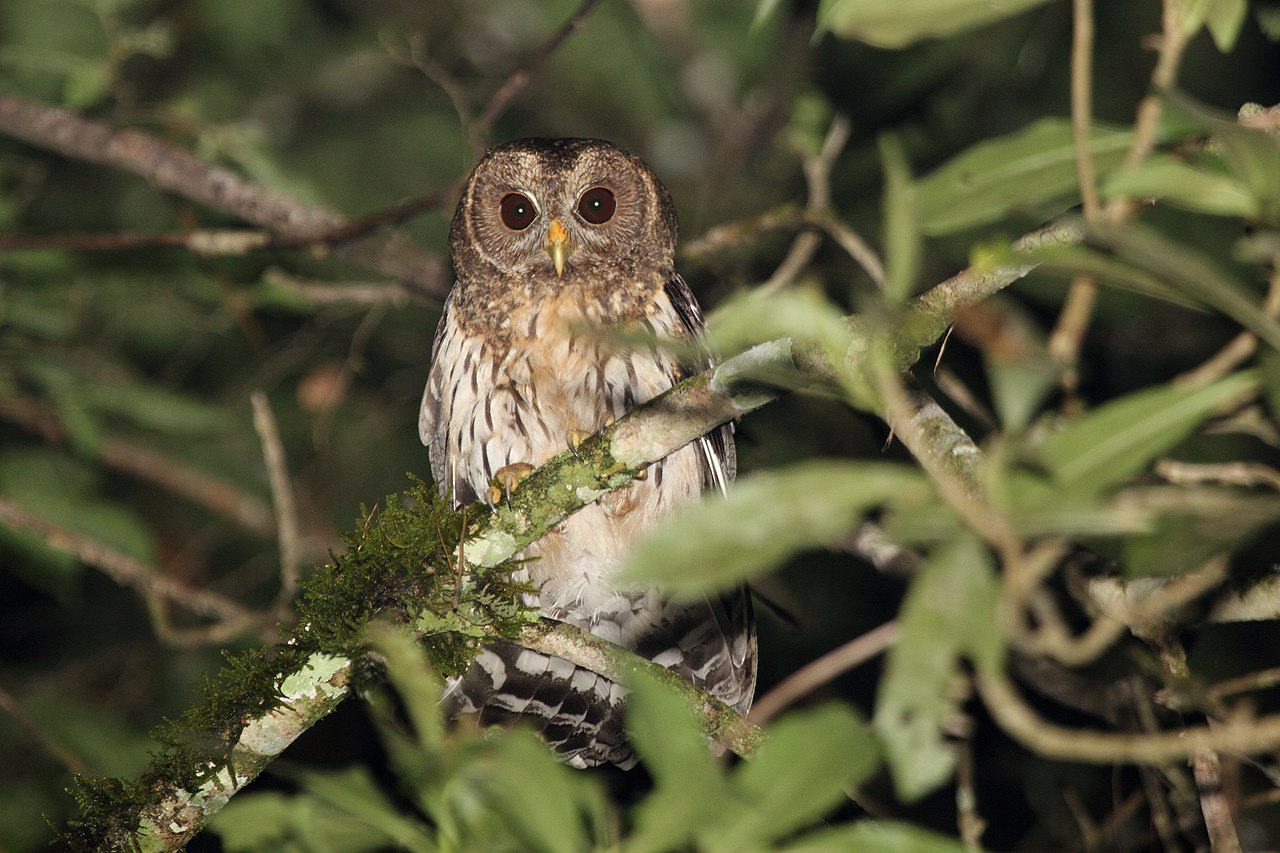
Mottled owl (búho café), Strix virgata. Photo: Dominic Sherony, CC BY-SA 2.0, via Wikimedia Commons.
And yes, sometimes it's the howlers
Howler monkeys — congos — are usually filed under "dawn," and the deep, world-ending roar at first light is genuinely their signature. But they don't strictly keep office hours: research on wild troops has found long-distance roaring actually happens more at night than during the day, likely serving the same purpose after dark that it does at sunrise — telling neighboring troops exactly where this group is. So if a roar the size of a small landslide rolls through at 2 a.m., it isn't a monkey in distress. It's a congo troop doing perfectly ordinary paperwork in the dark.
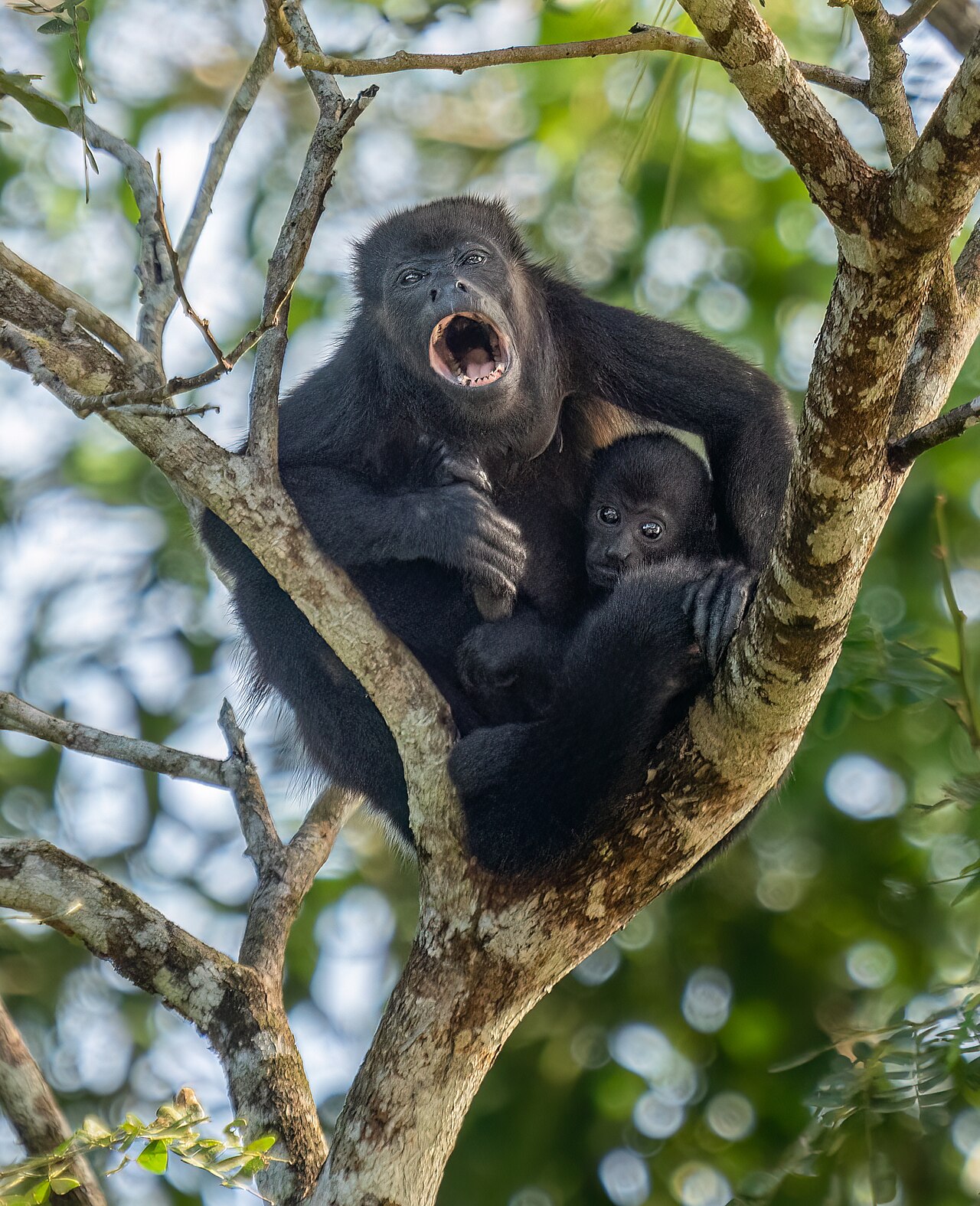
Mantled howler monkey (congo), Alouatta palliata. Photo: Rhododendrites, CC BY-SA 4.0, via Wikimedia Commons.
Why it's loudest right after the rain starts
Nearly everything above shares one trigger: water. Frogs need standing water to breed, and they call in short, intense bursts timed to the first storms of the wet season. Insects follow the same rhythm, since more moisture means more of the plant growth and prey they depend on. The loudest, densest chorus of the year tends to land in the first weeks after the dry season breaks — not the deep, established rains later on, but right at the turn, when everything that's been waiting goes off at once.
Species mix, and how loud any of it gets on a given night, shifts with season and exactly where you're standing — forest edge, open pasture, or close to the coast. But most of what sounds unfamiliar on a first night here turns out to have a name, a reason, and nothing worth worrying about.
Made using AI. This is a research-based post, not a first-hand account — sounds and species vary by season and site.
Photos: Brian Gratwicke, Vladlen Henríquez, Vengolis, Charles J. Sharp, Dominic Sherony, Rhododendrites — CC BY / CC BY-SA, via Wikimedia Commons (credited per image above).
Sources verified live (2026-07-24):
- Tink frog (Diasporus diastema) call description, calling rate, peak calling hours: ResearchGate/BioOne — Calling Activity of the Common Tink Frog
- Mexican tree frog (Smilisca baudinii) call after rain, distribution to Costa Rica: Frog Blog — A Costa Rican "Mexican" Treefrog
- Explosive breeding triggered by rainfall, chorus timing: BMC Ecology — Explosive breeding in tropical anurans
- Cricket/katydid stridulation vs. cicada daytime calling: NPR — Insect Sounds: Telling Crickets, Cicadas And Katydids Apart
- Common house gecko (Hemidactylus frenatus): chirp/click call, introduced from Southeast Asia via cargo ships: Tico Times — Meet the Common House Gecko
- Common pauraque (Nyctidromus albicollis): call description ("pur-WEER" whistle, dusk-to-dawn calling): All About Birds — Common Pauraque Sounds; road-sitting behavior, Spanish name "tapacaminos": Tico Times — Costa Rica Wildlife Guide Confesses Pauraque Pet Peeves
- Mottled owl (Strix virgata) call description, low-perch hunting behavior: Owl Pages — Mottled Owl; Animal Diversity Web — *Strix virgata*
- Howler monkeys vocalizing more at night than during the day, acoustic structure differing day vs. night: ResearchGate — Passive Acoustic Monitoring and Automatic Detection of Diel Patterns and Acoustic Structure of Howler Monkey Roars