 ramakaterra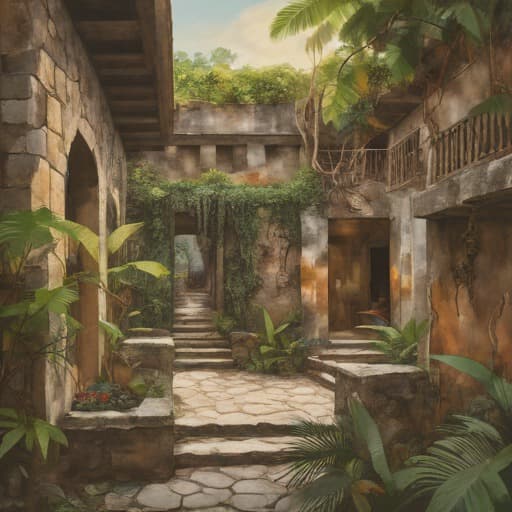
The Man the Island Was Meant to Erase
כתבה זו זמינה כרגע באנגלית בלבד.
He arrived on the island unable to read his own name. He was around twenty, poor, an orphan who had grown up half in institutions, and the whole country already knew exactly who he was: el monstruo de la Basílica — the Monster of the Basilica. The most hated man in Costa Rica, stepping off a boat onto San Lucas, a low green hump of jungle about eight kilometres off the port of Puntarenas, in the calm inner waters of the Gulf of Nicoya. It was 1950. He would not leave until 1969.
His name was José León Sánchez. That May, someone had broken into the Basílica de los Ángeles in Cartago — the most beloved shrine in the nation, home of la Negrita, the little dark statue of the Virgin that Costa Ricans travel on their knees to reach. The intruders killed the guard, damaged the statue, and stole her jewels. For a deeply Catholic country it was not merely a robbery; it was a wound to the faith of a whole people, and the fury needed a face.
By his own account, Sánchez never understood what he was carrying — sent by his girlfriend's father to leave some tin cans at a spot in Hatillo, not knowing they held the stolen jewels. When the older man was caught, he named the illiterate boy. Sánchez said police tortured a confession out of him, tormenting an already-rotten molar with a pin and prodding at his ears. He confessed, then took it back before the judge — too late. He was sent across the water to the harshest prison in the country, and the newspapers had their monster.
San Lucas had been a penal colony since 1873, built to hold the men Costa Rica most wanted to forget, with a reputation for torture and a death rate that made a sentence there feel close to a death sentence. Sánchez described his first years as something below human — long stretches in isolation, in his telling naked and starved of daylight, treated, as he put it, worse than a dog. This is the part of his life he spent the rest of it writing about, and the detail everyone remembers is not the cruelty. It is what he did inside it.
He learned to read.
Another prisoner used to write letters home for the men who couldn't — and he taught Sánchez his letters. When that man was released, he left the younger one his writing pads and pencils, and Sánchez simply took over the job, becoming the cell block's scribe. Somewhere in there the letters he wrote for others turned into something of his own. He entered a University of Costa Rica literary contest from his cell — and won first prize. The manuscript he finished around 1963, and published in 1968, was La isla de los hombres solos — "The Island of Lonely Men." It was the island itself, written from the inside: the cells, the sea, the men, the things done to them, set down by one of the men it was done to.
The book did what no court had. Read across Latin America, translated into a string of languages, made into a film, it forced Costa Rica to look at what it had built out on the water. The man the newspapers had named a monster turned out to be a writer — later one of his country's most decorated, honoured in 2018 with the Magón, its highest cultural prize, still writing when he died in 2022 at the age of ninety.
Clearing his name took the longest of all. He walked free in May 1969 on a reduced sentence, but he carried the conviction for another three decades. Only in the late 1990s — sources put it at 1998 or 1999 — did the Supreme Court finally absolve him, ruling that the case against the frightened, illiterate boy had never held. Almost half a century after the boat, the Monster of the Basilica was, in law, simply innocent.
And the island? The prison closed at the very end of the 1980s, and no one rebuilt it. Nobody moved in. The forest just took it back. Walk San Lucas today and the cell blocks still stand — roofless, coral-grey, their walls scrawled with the drawings men left to keep themselves human — but strangler figs have gone into the mortar, vines hang through the window bars, and in the courtyard where prisoners once stood, white-tailed deer graze without any fear at all. The country made it official the slow way these things go: a wildlife refuge in the early 2000s, and on the tenth of August 2020, Costa Rica's thirtieth national park.
That is the thing worth carrying away from San Lucas. The place built to erase a man became a sanctuary; the man it was built to erase became the reason anyone remembers the place. Given enough silence, the ground forgets our worst uses of it — the deer don't know the courtyard was a prison, the fig roots can't read the graffiti. But the sentence José León Sánchez really served was learning, in the loneliest cell in the country, to write his own name — and then a book that meant no one could ever tell the story without him in it.
Made using AI. This is a research-based post, not a first-hand account. Some particulars of Sánchez's life — the exact conditions he described, and the year of his final absolution — vary between sources and are noted below rather than stated as settled fact. Details he recounted in interviews are given as his own account, translated, not as verbatim quotation.
Sources
- José León Sánchez — born 1929, poor and orphaned, illiterate when imprisoned; implicated around age twenty in the 1950 theft of the Virgin of Los Ángeles jewels from the Basílica de los Ángeles in Cartago (a break-in in which the guard was killed and the statue damaged); his account of unknowingly carrying the jewels and of a confession extracted under torture; nicknamed "el monstruo de la Basílica"; taught to read and write in prison by a fellow inmate; won a University of Costa Rica literary contest; wrote La isla de los hombres solos (completed c. 1963, published 1968); released May 1969; absolved by the Supreme Court in the late 1990s; awarded the Magón Prize in 2018; died 2022 aged 90: José León Sánchez — Wikipedia, José León Sánchez on prison, the media and writing — The Tico Times, and José León Sánchez, Author of "The Island of Lone Men," Dies at Age 90 — The Costa Rica News
- San Lucas prison history (penal colony from 1873, reputation for torture and high mortality), location in the Gulf of Nicoya (~8 km off Puntarenas), the prison's closure at the end of the 1980s, present-day wildlife including white-tailed deer, and its declaration as Costa Rica's 30th national park on 10 August 2020: San Lucas Island — Wikipedia and Notorious former prison island becomes Costa Rica's 30th national park — Lonely Planet
Honesty note: the year of Sánchez's final absolution differs between sources — commonly given as 1998, though several Costa Rican accounts (La Nación, The Costa Rica News) specify a 1999 ruling by the Supreme Court's Third Chamber — so the essay says "the late 1990s." His release is documented as May 1969, giving roughly nineteen years on the island (an earlier telling of "about thirty years" conflates imprisonment with the decades he spent afterward still fighting the conviction, and is not used here). The specific conditions of his imprisonment — the torture, the isolation, the daylight deprivation — come from his own interviews and testimonial writing, translated, and are presented as his account rather than as independently verified record. The prison's exact closing year varies between sources (commonly 1991, some say 1989); the essay says "the very end of the 1980s." Distance from Puntarenas is given as roughly 8 km, which varies between sources.