 ramakaterra
Guaitil & the Chorotega Potters
כתבה זו זמינה כרגע באנגלית בלבד.
There is a village on the old road between Santa Cruz and Nicoya where the ground itself is the raw material. It is called Guaitil, and it sits in the Diriá district of Santa Cruz canton, in the low, hot country of Guanacaste. There is not a great deal to it — a green square, a church, a scatter of open-sided workshops. But walk into any of them and you find people doing something that has been done here, more or less unchanged, since long before the road had a name. They make pots, the way the Chorotega made them.
A craft older than the country
The Chorotega were the people of this coast. They spread across Costa Rica's northern Pacific — the province now called Guanacaste and the whole of the Nicoya Peninsula — and the peninsula still carries the name of one of their chiefs. When the Spanish arrived, most of what the Chorotega were began to come apart. The language went first and furthest. It is gone now; in Guaitil, the record says plainly, the people "have been absorbed into the Costa Rican culture, losing their language." What survives is quieter and more stubborn than a language. It is a way of handling clay — the knowledge of where the good clay lies, how to draw color out of a stone, the patience a pot needs before it will hold together — a memory carried in the hands rather than the mouth, and in Guaitil it never stopped being passed down.
Everything by hand
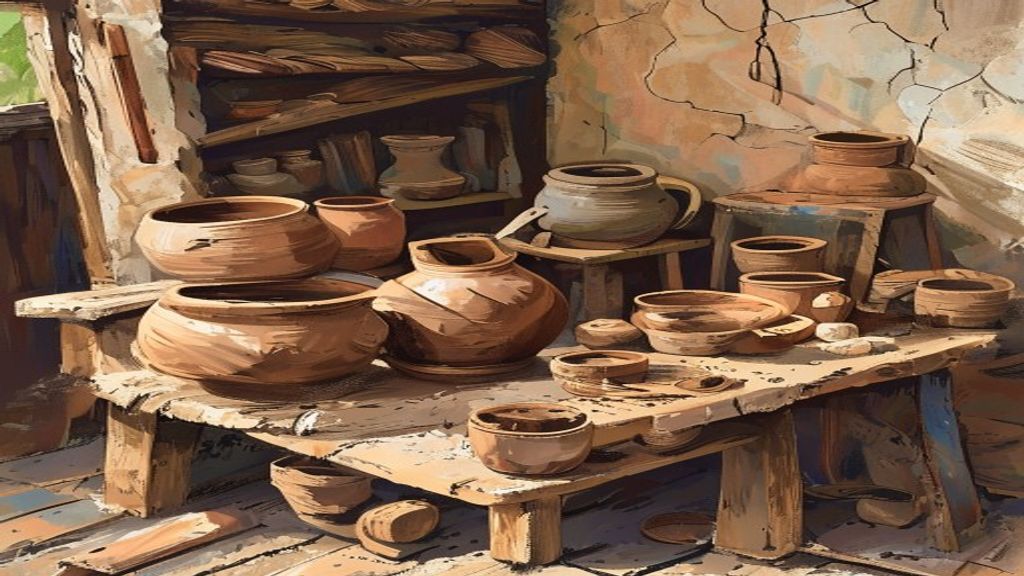
The first thing to know about a Guaitil pot is what is missing from the room. There is no potter's wheel — the technique simply never used one. Every piece is built entirely by hand, coil by coil, shaped and thinned and smoothed with the patience that takes. The finishing tools are as plain as the method: knives, wooden spoons, and smoothers cut from gourds, rubber, and sticks. Nothing on the table would have surprised an artisan a thousand years ago.
The clay comes from nearby, dug by hand with a cart and a shovel, then dried and pounded fine in mortars and pestles and sieved clean of stones. Mixed into it is sand gathered from the riverbeds where the iguanas lay their eggs — a small, exact piece of local knowledge that survives only because someone bothered to remember it. Clay, sand, and water are worked together by hand and foot until the material is right, and then the slow building begins.
Colors dug from the ground
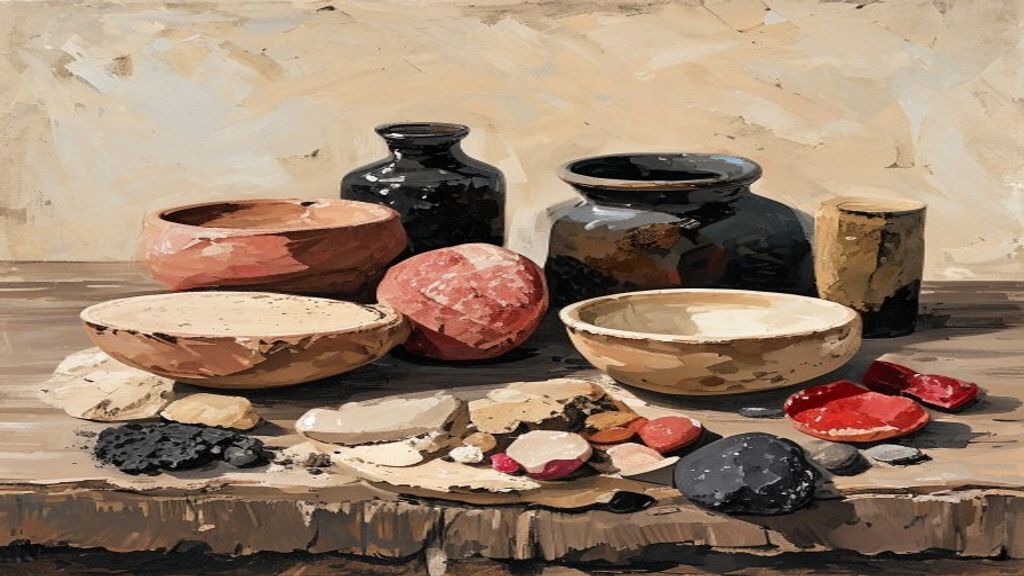
Here is the part that stops people: the colors on a Guaitil pot are not paint. They are the earth. The potters use mineral stones they call curiol — lumps of oxidized ore that they grind to powder and mix with water into a slip. Iron gives the deep terracotta reds. Manganese gives the blacks. Zinc gives the pale creams and whites. Three oxides, three colors, and the whole palette of the tradition comes out of them: the red-black-and-cream geometry, the animal motifs, the old Chorotega symbols for the natural world, all laid onto the surface before firing. The clay is local, the sand is local, and even the paint is local — quarried from the same ground as the pot it decorates.
Then the pieces dry a day or more in the sun and go into the fire — not a modern kiln with a dial, but a simple wood-burning oven, built by hand, that reaches its heat the old way and lends the pots their earthy, uneven, unmistakable tones.
The village and the province
Its canton seat, Santa Cruz, is known across the country as Costa Rica's "National Folklore City" — a title given for its festivals, marimba music, masked dances and regional cooking — and Guaitil's pottery is counted among the intangible cultural heritage that earned the region that name. The craft is no museum piece here. It is a living economy: the pots are made for the households of Guanacaste and for the travelers who come looking for them, and that steady trade is much of what keeps the workshops lit and the knowledge moving to the next pair of hands.
Nor is Guaitil the only surviving thread of the Chorotega. In the hills near Nicoya, the community of Matambú keeps its own version of the same inheritance, ceramics among them — two small places, a peninsula apart, doing the quiet work of not letting a very old thing end.
What's left, and why it matters
It would be easy to tell this as a story of loss, and part of it is one — a language gone, and a whole ordering of the world with it. But stand in a Guaitil workshop and the feeling is not elegy. It is continuity. Someone here still knows which stone burns red and which burns black, and still builds a jug from the ground up without a wheel to lean on — the way it was done before wheels ever reached this coast.
The oldest craft on this stretch of the Pacific is still being made, by hand, out of the same red earth it was always made from. In Guaitil, it is simply still turning — quietly, and on nobody's wheel.
Made using AI.
Sources verified live (2026-07-26):
- Guaitil location (Diriá district, Santa Cruz canton, Guanacaste; on the old Santa Cruz–Nicoya route), pre-Columbian Chorotega style, reds/creams/blacks, made for local use and the tourist trade: Wikipedia — Guaitil
- Made entirely by hand, without pottery wheels; local clay; wood-fired ovens; Chorotega identity and technique: Caravan Tours — Visiting the Guaitil Pottery Village
- Clay extraction by cart and shovel, pulverizing with mortars/pestles, iguana-egg riverbed sand, gourd/wood/rubber/stick tools, curiol mineral colors (iron = red, manganese = black, zinc = white/cream), primitive wood-burning kiln, techniques of the Chorotega passed down: The Tico Times — The Making of Traditional Costa Rica Pottery from Guaitil (2024)
- Chorotega inhabited CR's northern Pacific (Guanacaste + Nicoya Peninsula); Mangue language extinct, "in Guaitil… losing their language"; ceramics preserved as cultural identity: Wikipedia — Chorotega people
- Santa Cruz declared Costa Rica's "National Folklore City"; Guaitil de Santa Cruz named as a community keeping the pre-Columbian handmade-pottery tradition alive as intangible cultural heritage: The Costa Rica News — Santa Cruz, the "National Folklore City" of Costa Rica
- Matambú near Nicoya as a surviving Chorotega community preserving its traditions (including pottery): The Voz de Guanacaste — Matambú Embraces Its Culture With Tours on Chorotega Life
Researched and written by AI, from the sources above. Made using AI.